Jules Denis, Baron du Potet or Dupotet de Sennevoy (12 April 1796 – 1 July 1881) was a French esotericist. He practiced homeopathy in London during part of his life, and became a renowned practitioner of mesmerism—the theories first developed by Franz Mesmer involving animal magnetism.
He was born at Sennevoy-le-Haut, the son of Charles Jean-Baptiste Dupotet, seigneur de La Chapelle et de Sennevoy, and Pierrette Babeau Simone. He was married twice, to Aglaé Saunier in Paris in 1833, and the second time to Marie Isaure Hérault. He died in Paris and is buried in the Montmartre Cemetery.
Du Potet was a highly successful mesmerist. Some attributed this to the fact he was missing the thumb on his right hand. His reputation was such, apparently, that a man was convicted of murder and executed based on evidence given by «one of Du Potet’s clairvoyantes». He operated a free school of magnetism in Paris from 1826 on, and from 1837 to 1845 practised as a homeopathic physician in London, where he successfully treated epileptic girls at the North London Hospital and according to a letter to the editor of The Lancet his experiments became the talk of the town.
For du Potet, who was in correspondence with mesmerists worldwide, mesmerism was, not unlike Utopian socialism, an aid in bringing about social transformation, even a revolution. An 1890 article in the English occult magazine Lucifer praises him as an ardent supporter of mesmerism whose «powerful voice» might have stopped the «travesty» of hypnotism.
Du Potet also pursued occult applications of mesmerism. Eliphas Levi praised him highly in his History of Magic, and said that magnetism had unlocked for him the secrets of magic. Unlike Levi, he believed that trance enabled contact with the dead and with never incarnated spirits, and his circle believed in remote influence by means of magnetic currents. He was a member of the Theosophical Society; his writings were quoted extensively by Helena Blavatsky, who regarded him as an adept. In The Discovery of the Unconscious, Henri Ellenberger considers him to have «developed … delusions of grandeur».
Du Potet published and edited the Journal du magnetisme from 1845 to 1861. Books he wrote include Introduction to the Study of Animal Magnetism (1838) and La magie dévoilée et la science occulte (1852), a copy of which was owned by Victor Hugo.
Жюль Дени Барон Дюпоте или Дюпоте Сенвуа (12 апреля 1796 – 1 июля 1881) был французским оккультистом и гипнотизером. Часть своей жизни он практиковал гомеопатию в Лондоне и был авторитетным месмеристом — последователем учения Антона Месмера о животном магнетизме.
Он родился 12 апреля 1796 года в местечке Сенвуа-ле-От. Его отец был дворянином и владел поместьем Сенвуа. Дюпоте Сенвуа женился дважды. Первый раз на Аглае Сонье в Париже в 1833, второй раз на Мари Изауре Эро. Он умер в Париже в 1881 и похоронен на кладбище Монмартр.
Дюпоте являлся в высшей степени успешным месмеристом. Некоторые объясняли это тем, что у Дюпоте не хватало большого пальца на правой руке. Его репутация, однако, была такова, что однажды некий мужчина был осужден и казнен только на основании одного из его сеансов ясновидения. Начиная с 1826 года он управлял свободной школой магнетизма в Париже, с 1837 по 1845 вел частную практику врачом-гомеопатом, где успешно лечил молодых девушек от эпилепсии в Северной Лондонской больнице, но согласно письму редактора The Lancet его опыты стали предметом сплетен.
Для Дюпоте, который вел переписку с месмеристами по всему миру, месмеризм был не утопическим социализмом, а средством, помогающим трансформации общества, почти революции. В статье от 1890 года английский оккультный журнал Lucifer восхвалял его, как рьяного поборника месмеризма, » чей влиятельный голос возможно остановил карикатурный гипнотизм».
Дюпоте Сенвуа исследовал оккультные приложения месмеризма. Элиас Леви высоко оценил его в своей книге История Магии, сказав, что магнетизм открыл для него секреты магии. В отличии от Леви, он считал, что транс делал возможным контакт с бесплотными духами и мертвыми, а его окружение верило в удаленное управление посредством магнетических потоков. Он состоял членом Теософского общества, а Блаватская часто цитировала его письменные труды и считала Посвященным. В своей книге «Открытие бессознательного» Анри Элленберже утверждал, что у него развилась мания величия.
Дюпоте был редактором журнала Journal du magnetisme с1845 по 1861. Книги, которые он написал включают «Руководство к изучению животного магнетизма, собранное из тридцатилетних опытов и наблюдений» (СПб., 1856) и Разоблачённая магия (или Начала оккультной науки).
The crystal skulls are human skull hardstone carvings made of clear or milky white quartz, claimed to be pre-Columbian Mesoamerican artifacts by their alleged finders; however, none of the specimens made available for scientific study has been authenticated as pre-Columbian in origin.
The results of these studies demonstrated that those examined were manufactured in the mid-19th century or later, almost certainly in Europe during a time when interest in ancient culture was abundant. Despite some claims presented in an assortment of popularizing literature, legends of crystal skulls with mystical powers do not figure in genuine Mesoamerican or other Native American mythologies and spiritual accounts.
The skulls are often claimed to exhibit paranormal phenomena by some members of the New Age movement, and have often been portrayed as such in fiction. Crystal skulls have been a popular subject appearing in numerous sci-fi television series, novels, films, and video games.
Trade in fake pre-Columbian artifacts developed during the late 19th century to the extent that in 1886, Smithsonian archaeologist William Henry Holmes wrote an article called «The Trade in Spurious Mexican Antiquities» for Science.Although museums had acquired skulls earlier, it was Eugène Boban, an antiquities dealer who opened his shop in Paris in 1870, who is most associated with 19th-century museum collections of crystal skulls. Most of Boban’s collection, including three crystal skulls, was sold to the ethnographer Alphonse Pinart, who donated the collection to the Trocadéro Museum, which later became the Musée de l’Homme.
Many crystal skulls are claimed to be pre-Columbian, usually attributed to the Aztec or Maya civilizations. Mesoamerican art has numerous representations of skulls, but none of the skulls in museum collections come from documented excavations. Research carried out on several crystal skulls at the British Museum in 1967, 1996 and 2004 shows that the indented lines marking the teeth (for these skulls had no separate jawbone, unlike the Mitchell-Hedges skull) were carved using jeweler’s equipment (rotary tools) developed in the 19th century, making a supposed pre-Columbian origin problematic.
The type of crystal was determined by examination of chlorite inclusions. It is only found in Madagascar and Brazil, and thus unobtainable or unknown within pre-Columbian Mesoamerica. The study concluded that the skulls were crafted in the 19th century in Germany, quite likely at workshops in the town of Idar-Oberstein, which was renowned for crafting objects made from imported Brazilian quartz in the late 19th century.
It has been established that the crystal skulls in the British Museum and Paris’s Musée de l’Homme were originally sold by the French antiquities dealer Eugène Boban, who was operating in Mexico City between 1860 and 1880. The British Museum crystal skull transited through New York’s Tiffany’s, whilst the Musée de l’Homme’s crystal skull was donated by Alphonse Pinart, an ethnographer who had bought it from Boban.
In 1992, the Smithsonian Institution investigated a crystal skull provided by an anonymous source; the source claimed to have purchased it in Mexico City in 1960, and that it was of Aztec origin. The investigation concluded that this skull also was made recently. According to the Smithsonian, Boban acquired his crystal skulls from sources in Germany, aligning with conclusions made by the British Museum.
The Journal of Archaeological Science published a detailed study by the British Museum and the Smithsonian in May 2008. Using electron microscopy and X-ray crystallography, a team of British and American researchers found that the British Museum skull was worked with a harsh abrasive substance such as corundum or diamond, and shaped using a rotary disc tool made from some suitable metal. The Smithsonian specimen had been worked with a different abrasive, namely the silicon-carbon compound carborundum, which is a synthetic substance manufactured using modern industrial techniques. Since the synthesis of carborundum dates only to the 1890s and its wider availability to the 20th century, the researchers concluded that it was made in the 1950s or later.
None of the skulls in museums come from documented excavations. A parallel example is provided by obsidian mirrors, ritual objects widely depicted in Aztec art. Although a few surviving obsidian mirrors come from archaeological excavations, none of the Aztec-style obsidian mirrors are so documented. Yet most authorities on Aztec material culture consider the Aztec-style obsidian mirrors as authentic pre-Columbian objects.Archaeologist Michael E. Smith reports a non peer-reviewed find of a small crystal skull at an Aztec site in the Valley of Mexico. Crystal skulls have been described as «A fascinating example of artifacts that have made their way into museums with no scientific evidence to prove their rumored pre-Columbian origins.
A similar case is the «Olmec-style» face mask in jade; hardstone carvings of a face in a mask form. Curators and scholars refer to these as «Olmec-style», as to date no example has been recovered in an archaeologically controlled Olmec context, although they appear Olmec in style. However they have been recovered from sites of other cultures, including one deliberately deposited in the ceremonial precinct of Tenochtitlan (Mexico City), which would presumably have been about 2,000 years old when the Aztecs buried it, suggesting these were as valued and collected as Roman antiquities were in Europe.
Sir Edward Kelley or Kelly, also known as Edward Talbot (1 August 1555 – 25 November 1597) was an English Renaissance occultist and self-declared spirit medium. He is best known for working with John Dee in his magical investigations. Besides the professed ability to summon spirits or angels in a mirror, which John Dee so valued, Kelley also claimed to possess the secret of transmuting base metals into gold, the goal of alchemy, as well as the supposed Philosopher’s Stone itself.
Legends began to surround Kelley shortly after his death. His flamboyant biography, his relationships with Queen Elizabeth I’s royal magus Sir John Dee and the Emperor Rudolf II, and his claims of great alchemical skill and the ability to communicate with angels have all led to his relative notoriety among historians. This has made him (along with the German Faustus and Sir John Dee himself) one source for the folklorical image of the alchemist-medium-charlatan.
Much of Kelley’s early life is obscure. He claimed descent from the family of Ui Maine in Ireland. He was born at Worcester on 1 August 1555, at 4 P.M. according to a horoscope that John Dee drew up (based on notes Dee kept in his almanac/diary). His sister Elizabeth was born in 1558, and he had a brother Thomas who later joined him in Dee’s household. However, much of Kelley’s life before meeting John Dee is not known. He may have studied at Oxford under the name of Talbot; whether or not he attended university, Kelly was educated and knew Latin and possibly some Greek by the time he met Dee.
Anthony Wood records in Athenae Oxoniensis that Kelley, «being about 17 years of age, at which time he attained to a competency of Grammar learning at Worcester and elsewhere, was sent to Oxford, but to what house I cannot tell. However, I have been informed by an ancient Bachelor of Divinity who in his younger years had been an Amanuensis to Mr Thomas Allen of Gloucester-hall, that he (Kelly) had spent some time in that House; whereupon I, recurring to the matriculation, could not find the name Kelly, only Talbot of Ireland, three of which name were students there in 1573, 74, &c… This relation being somewhat dubiously delivered to me, I must tell you that Kelly having an unsettled mind, left Oxford abruptly, without being entitled into the matricula.» According to some accounts, Kelley was pilloried in Lancaster for forgery or counterfeiting. Both his ears were supposedly cropped, a common punishment during the Tudor Dynasty. He usually wore a cap on his head, and it was thought this was to hide his lack of ears. John Weever says, «Kelly (otherwise called Talbot) that famous English alchemist of our times, who flying out of his own country (after he had lost both his ears at Lancaster) was entertained with Rudolf the second, and last of that Christian name, Emperor of Germany. Some accounts say that he first worked as an apothecary’s apprentice: some say he worked as a notary in London.
Dee’s Scrying Mirror
Kelley approached John Dee in 1582. Dee had already been trying to contact angels with the help of a crystal-gazer, but he had not been successful. Kelley professed the ability to do so, and impressed Dee with his first trial. Kelley became Dee’s regular medium. Dee and Kelley devoted huge amounts of time and energy to these «spiritual conferences». From 1582 to 1589, Kelley’s life was closely tied to Dee’s. In those seven years, they conducted conferences or seances, including «prayers for enlightenment… in the spirit of Dee’s ecumenical hopes that alchemy and angelic knowledge would heal the rift of Christendom». Dee also believed that the angels held knowledge that would aid the English in their discoveries of new and uncharted lands on Earth.
Kelley married a widow, Jane Cooper of Chipping Norton. He helped educate her two children: the girl, future poet Westonia, later described him as a ‘kind stepfather’ and noted how he took her in after the deaths of her two grandmothers. Kelley had also hired a Latin tutor for her.
About a year after entering into Dee’s service, Kelley appeared with an alchemical book (The Book of Dunstan) and a quantity of a red powder which, Kelley claimed, he and a certain John Blokley had been led to by a «spiritual creature» at Northwick Hill. (Accounts of Kelley’s finding the book and the powder in the ruins of Glastonbury Abbey were first published by Elias Ashmole, but are contradicted by Dee’s diaries.) With the powder (whose secret was presumably hidden in the book) Kelley believed he could prepare a red «tincture» which would allow him to transmute base metals into gold. He reportedly demonstrated its power a few times over the years, including in Bohemia where he and Dee resided for many years.
In 1583, Dee became acquainted with Prince Albert Łaski, a Polish nobleman interested in alchemy. In September of that year, Dee, Kelley, and their families left England with Łaski for the Continent. Dee sought the patronage of Emperor Rudolf II in Prague and King Stefan of Poland in Kraków; Dee apparently failed to impress either monarch enough to earn a permanent station. Dee and Kelley lived a nomadic life in Central Europe, meanwhile continuing their spiritual conferences. While Kelley was apparently more interested in alchemy, Dee seemed more interested in making contact with the angels. Kelley’s supposed value was as a medium, as only he was able to understand and scribe their language. According to those close to Dee (particularly his son Arthur) there was no little tension between the two men and their families as they journeyed through Europe. Some claim that «Dee seems to have driven Kelly to the brink of insanity, forcing him to perform long skrying sessions on a nearly daily basis».
Kelley and Dee’s involvement in necromancy eventually caught the attention of the Catholic Church, and on 27 March 1587 they were required to defend themselves in a hearing with the papal nuncio, Germanico Malaspina, bishop of San Severo. Dee handled the interview with tact, but Kelley is said to have infuriated the nuncio by stating that one of the problems with the Catholic Church is the «poor conduct of many of the priests.» The nuncio noted in a letter that he was tempted to toss Kelley out of the window (defenestration was a somewhat common tradition in Prague at the time).
The Alchemist
In 1586, Kelley and Dee found the patronage of the wealthy Bohemian Lord William of Rosenberg, a senior official from a powerful family who also shared Kelley and Dee’s alchemical interests and is known to have participated in spiritual sessions with the two men. Kelley and Dee settled in the town of Třeboň and continued their research there, and according to Dee’s diary it was during this time that Kelley is said to have performed his first alchemical transmutation (on 19 December 1586). Kelley’s skilled draughtsmanship is evident in the notes taken by Dee during certain séances (these notes are available in Dee’s Book of Enoch). These notes show Kelley’s initial commitment to the alchemists’ mutual goal. However, he soon began to waver and expressed a desire to stop. Dee insisted that they continue. In 1587, possibly as an act to sever the sessions, Kelley revealed to Dee that the angels (namely a spirit «Madimi») had ordered them to share everything they had, including their wives. Dee, anguished by the «order» of the angels, subsequently broke off the spiritual conferences. He did, however, share his wife. This «cross-matching» occurred on 22 May 1587 and is noted in John Dee’s diary: “May 22nd, Mistris Kelly received the sacrament, and to me and my wife gave her hand in charity; and we rushed not from her». Nine months later, on 28 February, Dee’s wife Jane gave birth to a son, Theodorus Trebonianus Dee. Although there may have been speculation among the families that the child was actually Kelley’s, he was raised as Dee’s son; the «cross-matching» incident remained a secret (as did many of their activities) until after the post-mortem publication of Dee’s diaries; there was no controversy at the time.
Though it seems the two shared an intimate and often cooperative partnership, it was often characterised as «quarrelsome» and «tense» by contemporaries and historians. Also they were clearly involved in activities that could be seen as heretical to the Catholic Church of the time, so a certain amount of tact and secrecy was required. Kelly left Dee at Trebon in 1589, possibly to join the emperor’s court at Prague. Dee returned to England. They did not see each other again.
By 1590 Kelley was living an opulent lifestyle in Europe, enjoying the patronage of nobility: he received several estates and large sums of money from Rožmberk. Meanwhile, he continued his alchemical experiments until he had convinced Rudolph II that he was ready to start producing gold, the purpose of his work. Rudolf knighted him Sir Edward Kelley of Imany and New Lüben on 23 February 1590. In May 1591, Rudolf had Kelley arrested and imprisoned in the Křivoklát Castle outside Prague, supposedly for killing an official named Jiri Hunkler in a duel; it is possible that he also did not want Kelley to escape before he had actually produced any gold. In 1595, Kelly agreed to co-operate and return to his alchemical work; he was released and restored to his former status. When he failed to produce any gold, he was again imprisoned, this time in Hněvín Castle in Most. His wife and stepdaughter attempted to hire an imperial counselor who might free Kelley from imprisonment, but he died a prisoner in late 1597/early 1598 of injuries received while attempting to escape.
A few of Kelley’s writings are extant today, including two alchemical verse treatises in English, and three other treatises, which he dedicated to Rudolph II from prison. They were entitled Tractatus duo egregii de lapide philosophorum una cum theatro astronomiae (1676). The treatises have been translated as The Alchemical Writings of Edward Kelley (1893).
The Enochian language.
Kelley’s «angels» communicated to him in a special language called termed ‘Angelic’, subsequently called Enochian, which he then relayed to Dee. Some modern cryptographers argue that Kelley invented it. Some claim that this was all a farce, but are not clear whether Dee was a victim or an accomplice. Because of this precedent, and of a dubious connection between the Voynich Manuscript and John Dee (through Roger Bacon), Kelley has been suspected of having fabricated that book too, to swindle Rudolf.
The angelic language was supposedly dictated by angels whom Kelley claimed to see within a crystal ball or mirror. (Dee experimented in optics, so these tools were always handy). The angels were said to tap out letters on a complicated table, something like a crossword puzzle but with all the cells filled in. The first third were tapped out with each angelic word backwards; the following two-thirds with each word forwards. There are no significant errors or discrepancies in word usage between the first and following parts. The English translations were not tapped out but, according to Kelley, appeared on little strips of paper coming out of the angels’ mouths.
The angelic word telocvovim is glossed as «he who has fallen», but it is actually a Germanic-like combination of two other angelic words: teloch (glossed as «death») and vovin (glossed as «dragon»). Thus «he who has fallen» would be literally translated as «death dragon», both rather obvious references to Lucifer. Neither Kelley nor Dee mention this in their writings.
One argument against Kelley’s fabrication of angelic language is that the English translations are in a very different style of writing to that of Kelley’s own work. This raises the possibility that Kelley actually plagiarized material from a different source. However, no likely source material has ever surfaced.
Dee considered the dictation of angelic material highly important for three reasons. First, Dee believed the angelic represented a documentable case of true glossolalia, thereby «proving» that Kelley was actually speaking with angels and not from his imagination. Second, the angels claimed that their language was actually the original prototype of Hebrew: the language with which God spoke to Adam, and thus the first human word. Third, the angelic material takes the form of a set of conjurations that would summon an extremely powerful set of angelic beings who would reveal many secrets to those who sought them, especially the key to the philosopher’s stone, to god-like wisdom, and eternal life.
The Tecaxic-Calixtlahuaca head is a terracotta head, probably originally part of a larger figurine, discovered in 1933 among pre-Columbian or just post-Columbian grave goods in the Tecaxic-Calixtlahuaca zone in the Toluca Valley, approximately 65 kilometers northwest of Mexico City.
Because the head appears to be similar in style to artifacts of Roman origin, some believe that it is evidence of pre-Columbian trans-oceanic contact between Rome and the Americas, a view strongly promoted by archaeologist Romeo H. Hristov. However, several other explanations for its presence have also been put forward.
The object was discovered by archaeologist José García Payón during an excavation in 1933. It was a grave offering, found under three intact floors of a pyramidal structure. Along with the head were found a number of objects made of gold, copper, turquoise, rock crystal, jet, bone, shell and pottery. The burial was dated to between 1476 and 1510 AD. Payón did not publish information about the head itself until 1960.
An assessment of the case was made in 2001 by Romeo H. Hristov of University of New Mexico and Santiago Genovés T. of National Autonomous University of Mexico. This result clears up the doubts of Colonial manufacture of the artifact, and makes the hypothesis of Roman origin – among other possibilities – applicable. The identification of the head as Roman work from the II–III century A.D. has been further confirmed by Bernard Andreae, a director emeritus of the German Institute of Archaeology in Rome, Italy. According to Andreae «[the head] is without any doubt Roman, and the lab analysis has confirmed that it is ancient. The stylistic examination tells us more precisely that it is a Roman work from around the II century A.D., and the hairstyle and the shape of the beard present the typical traits of the Severian emperors period [193-235 A.D.], exactly in the ‘fashion’ of the epoch.» On the other hand, an examination of the field notes of the archaeologist in charge of the excavation as well as the site itself have not revealed.
A thermoluminescence test performed in 1995 by P. Schaaf and G.A. Wagner in the FS Archäometrie unit in Heidelberg, Germany, established its age range to somewhere between the 9th century BC and the middle of the 13th century AD, confirming its pre-colonial provenance.
Bernard Andreae of the German Institute of Archaeology in Rome, Italy, who examined photographs of the artifact, stated that he believed that it was Roman and proposed the 2nd century AD as its date of origin, based on the hairstyle and the beard.
Researchers who have analyzed the artifact have come up with several possible explanations for the object’s presence at the site:
A hoax: according to an informal declaration by Paul Schmidt, an archaeologist at UNAM, the head was planted in the site by a participating archaeologist, Hugo Moedano, in an attempt to play a practical joke on José García Payón, supervisor of the dig. Schmidt moreover stated earlier that García Payón was not present during the excavation. García Payón’s son insists that his father stated that he was on the site at the time of discovery. According to Hristov, these allegations are hearsay, and because the individuals directly involved have since died, a confirmation or refutation of the allegations has become impossible.
An import from an early European visitor who came to Central Mexico. The date range for the burial includes the early period of European exploration of the Americas, though it predates the first sustained contact with Mexico under Hernán Cortés. According to Hristov, it is possible but highly unlikely that the head was introduced during the Medieval or early Colonial period. Hristov notes that other historians have considered the possibility of a Norse visit to the region and that the figure’s unusual head-dress bears a possible resemblance to Norse or Viking headgear.
Hristov argues that a Roman, Phoenician, or Berber ship, or the drifting of such a shipwreck to the American shores is the best explanation. Hristov claims that the possibility of such an event has been made more likely by the discovery of evidences of travels from Romans, Phoenicians and Berbers in the 6th or 5th century BC to Tenerife and Lanzarote in the Canaries, and of a Roman settlement from the 1st century BC to the 4th century AD on Lanzarote island. David Grove, an archaeologist at the University of Illinois pointed out that being washed ashore from a Roman shipwreck does not imply any «contact», let alone Roman «discovery» of the New World.
This story begins when not very famous artist Basil draw a picture of young and very handsome man Dorian Grey. Artist said to his friend Lord Henry that he took very much himself in that picture. Lord Henry was very excited by Dorian’s handsomeness, and he decided to teach young man how he should live and what he can use his youth. At the first they meeting, when Basil was painting picture from sitting Grey, Henry was telling to Dorian that the youth and beauty is the most important things in the world, but they will be disappeared with years. So when Basil has finished the picture and Dorian has seen his beautiful portrait, he was excited by himself beauty and was frightened because he will lost it in future…
Manager is a profession that appeared not so long ago. But it developed in every sector of business, service and production very fast. Nowadays it’s almost impossible to imagine any successful business without thoughtful management. The more different organizations developed, the less understanding among different departments in every area was left. And then managers came to help. They give different tasks, control their fulfillment in the different departments and take the main part in the organization development in general too. In this book you will read four stories about successful managers. They didn’t only make amazing careers but also made their companies world leaders.
Вы зашли на сайт преподавателя английского дистанционно. Меня зовут Александр. Я даю индивидуальные разговорные уроки очно в Москве и провожу занятия английским по skype. Уже почти три десятка лет я с успехом помогаю людям научиться говорить на English.
Большую часть моего урока говорит ученик. Все аспекты языка отрабатываются исключительно вслух: Вы будете говорить экспромтом, отвечать на вопросы, пересказывать заданную на дом аудио книгу и рассказ на интересную для Вас тему, читать вслух, повторять за мной, вслух отрабатывать грамматику. Для выхода на разговорный уровень я немного упрощу грамматику, меньше внимания буду уделять письму, но это даст нужный Вам результат: через некоторое время Вы будете говорить. Сначала медленно, скованно и с ошибками, затем все увереннее, потом свободно. Вы не выйдете на уровень носителя языка (в большинстве случаев для взрослого человека это невозможно), но проблемы самовыражения и общения с иностранцами перед Вами стоять не будет. При условии относительно старательных занятий, регулярного выполнения домашнего задания и приложения неэстремальных усилий средней степени напряженности.))
В обучении ежеурочно будет использоваться адаптированные аудио книги и файлы разных уровней, поскольку восприятие на слух и говорение являются обратными сторонами одного умения общаться.
Индивидуальное обучение английскому по скайпу имеет много преимуществ:
1) Вам не нужно никуда идти, тратить время на дорогу. Включаете компьютер или планшет и интернет репетитор начинает дистанционные занятия по английскому языку онлайн.
2) Дистанционное обучение в домашних условиях обходится относительно недорого в сравнении с ценами на занятия языком Шекспира в Москве.
Ваш возможно будущий преподаватель английского языка по скайп родился в далеком 1968, закончил профильный факультет МПГУ (МГПИ им. Ленина) в 1990 году, трудился на ниве преподавания, пока в 1999 не пришел только к частному репетиторству. С гордостью могу заявить, что одним из первых в Москве организовал обучение сначала по телефону, а затем, когда распространились онлайн технологии, примерно в 2004 году стал обучать удаленно через skype и, начиная с этого времени, могу называть себя «учитель английского по скайпу». Сейчас в ходу уже viber и whatsapp.))
Я интересуюсь мировой историей, научно-популярной литературой, психологией, йогой, технологиями, последними новостями, люблю провоцировать диспуты и задавать много вопросов.
Если Вы ищете такого учителя, то, предлагаю бесплатное пробное занятие, на котором Вы сможете оценить, подойдем ли мы друг другу, устроит ли Вас эта технология.
Изучение English могут начать обучающиеся любого уровня, начинающие, продвинутые, intermediate, или с нуля. Занимаюсь со студентами и пенсионерами, школьниками и взрослыми.
Занятия проводятся удаленно по скайпу, viber или любой доступной для установки платформе. Моё физическое тело находится в городе Москва, в 5 минутах неспешной ходьбы от метро Новогиреево, если Вам удобно сюда добираться, то можете заниматься со мной лично.
Стоимость изучения иностранного языка Вы можете посмотреть в меню наверху в разделе Цены.
Мнение учеников о моих уроках Вы можете прочитать в разделе Отзывы.
Связаться со мной Вы можете используя мои Контакты.
One reason that personality is such an important psychological concept is because of what it tells us about the kind of lives we’re likely to lead. For example, if you are very conscientious then you’re more likely to enjoy good physical health and more harmonious relationships; extroverts are happier; highly neurotic people experience more mental health problems; open-minded people command higher earnings; and, just as you’d expect, more ‘agreeable’ people are also usually popular and have lots of friends.
But our personalities don’t only show themselves in our long-term success and well-being. They also correlate with the kind of things we get up to on a mundane, daily basis. A new study published in Personality and Individual Differences has charted these behavioural ‘signatures’ of the Big Five personality traits – listed above – in more detail than ever before. And the results are surprising.
While it goes without saying, for instance, that extroverts (which psychologists spell ‘extraverts’) are more likely to go to parties and that conscientious people are less likely to be tardy, you might not have anticipated that extroverts also spend more time luxuriating in hot tubs or that conscientiousness goes hand in hand with reading fewer books.
The researchers, Benjamin Chapman at the University of Rochester and Lewis Goldberg at the Oregon Research Institute, profiled nearly 800 people in Oregon, USA, most of whom were white, and their average age was 51. The personality test asked participants to rate how accurately 100 different trait adjectives described their personalities, including words such as bashful, kind, neat, relaxed, moody, bright and artistic. The researchers then compared these personality test scores with the same participants’ answers, recorded four years later, to how often they had performed 400 different activities over the last year, from reading a book to singing in the shower.
As well as wallowing more in hot tubs, extroverts apparently spent more time planning parties, drinking in bars, discussing ways to make money, talking on the phone while driving, decorating, and trying to get a tan (though not all at once). Greater conscientiousness, in contrast, was distinguished by the avoidance of various activities, including such innocuous pastimes as reading (which Chapman and Goldberg speculated may be seen by the highly conscientious as a leisure-time luxury), swearing and chewing on a pencil.
People scoring high on agreeability, meanwhile, said they spent more time doing ironing, playing with children and washing the dishes – presumably because their strong motivation to keep other people happy means they’d rather do the chores than have domestic acrimony. More surprisingly, they were also more likely to sing in the shower or the car.
Neurotic folk, meanwhile, engaged more often in activities that are associated with helping reduce mental distress, such as taking more tranquilisers and anti-depressants. But they also admitted to more anti-social behaviours, such as losing their temper more often, or making fun of others – perhaps because they struggle to keep their own emotions in check. Finally, open-mindedness went together with some obvious behaviours like reading poetry, going to the opera, smoking marijuana and producing art, but also some less obvious, like swearing around others, eating spicy food at breakfast, or lounging around the house with no clothes on. (To be precise, the highest scorers said they were about twice as likely to have sat around in the nude for more than 15 times in the past year, compared to the lowest scorers.) They were also less likely to follow a sports team.
This study is impressive for the huge range of activities that it investigated, though it remains to be seen if the same personality-behaviour links would be found in other cultures around the world, and of course there remain many thousands of other daily behaviours to be looked at. The new findings add to earlier research on behaviour-personality links, most of which has tended to focus on more specific activities or only on certain traits. For example, previous studies had shown that the highly conscientious are more likely to wear a watch, comb their hair and polish their shoes; that extroverts have more tattoos, that introverts use more concrete language; agreeable folk get fewer speeding tickets and eat more sweet foods; and that open-mindedness correlates with a penchant for fruit and vegetables, art-house movies, and a preference for dry, rather than sweet, white wine.
Other research has looked at behaviours, some more obvious than others, that correlate with the so-called Dark Triad personality traits of Narcissism, Machiavellianism and Psychopathy. For example, high scorers on psychopathy aren’t just more prone to violence, bullying and aggression, they also maintain unusually long eye contact, and along with Machiavellians, are more likely to participate in and enjoy online trolling.
Another recent study found that the more highly that people scored across the Dark Triad, the more likely they were to say that they that were a “night owl” as opposed to a “morning lark” – that is, they rise later in the day and stay up later in the evening. Just as you would expect, narcissists take and post more selfies, and heterosexual women scoring higher in Machiavellianism are more likely to fake orgasm to deliberately deceive or manipulate their partners (as opposed to having their pleasure in mind).
There’s a serious side to this field of research – learning more about the harmful and unhealthy everyday behaviours linked to the different personality traits could contribute to better, more targeted health campaigns and interventions. Also, research into personality often involves people answering questionnaires about themselves, hopefully in an honest way. By discovering some quirky and less expected behavioural correlates of the Big Five traits, there’s the possibility of one day devising a questionnaire that asks people about the activities they engage in, without them realising they are actually revealing their personality.
Of course, there’s also a fun, thought-provoking element to the new findings – for example, if you’re a prolific curser, you can now defend your habit as being a sign of your open-mindedness. And maybe now you’ll also be a little more forgiving of your house-mate’s habit of singing in the shower. After all, it could just be another sign of his or her agreeable personality.
Стоимость занятия с репетитором по английскому языку вообще, и в Москве в частности, рассчитывается от стоимости академического часа, равному 45 минутам, и зависит от нескольких, не связанных между собой, факторов. Реальный разбос стоимости 1 академического часа в Москве составляет от 300 рублей у начинающего репетитора-студента, обычно студентки, и до 6000 рублей у репетитора-носителя языка, работающего на элитную категорию учащихся.
Цена часа работы репетитора зависит от:
1) района Москвы. Цена в центре, на западе и юго-западе нашей столицы значительно выше, чем на востоке и юго-востоке.
2) Наличия свободного времени и учеников у преподавателя, и необходимости у него набирать новых. Например, при переезде в другой район Москвы, репетитору приходится набирать учеников с нуля, поскольку их большая часть не готова ездить далеко от своего месторасположения, и необходимо снизить расценки, чтобы набрать нужное количество обучающихся. И наоборот, если преподаватель работает и для репетиторства у него свободно только два-четыре вечера в неделю, то обычно объявляется высокая стоимость занятия, чтобы максимизировать доход от частного преподавания.
3) Опыта, медийной раскрученности, отзывов, наличия или отсутствия профильного образования, дополнительных сертификатов, научного звания, выпущенных учебников и прочих регалий. Например, автор самоучителя назначает намного более высокую цену за свои услуги, чем в среднем по рынку.
4) Средняя цена по Москве составляет на 2019 год 600-900 рублей за академический час.
В реальности, потенциальные ученики, или их родители, в случае, если им не нужно узконаправленное обучение: подготовка к ЕГЭ, английский по специальности, диалект, и т. д., больше ориентируются на устные отзывы об учителе английского языка и его близкое расположение, а не на объявляемую цену.



















 Jules Denis, Baron du Potet or Dupotet de Sennevoy (12 April 1796 – 1 July 1881) was a French esotericist. He practiced homeopathy in London during part of his life, and became a renowned practitioner of mesmerism—the theories first developed by Franz Mesmer involving animal magnetism.
 The crystal skulls are human skull hardstone carvings made of clear or milky white quartz, claimed to be pre-Columbian Mesoamerican artifacts by their alleged finders; however, none of the specimens made available for scientific study has been authenticated as pre-Columbian in origin.
 Many crystal skulls are claimed to be pre-Columbian, usually attributed to the Aztec or Maya civilizations. Mesoamerican art has numerous representations of skulls, but none of the skulls in museum collections come from documented excavations. Research carried out on several crystal skulls at the British Museum in 1967, 1996 and 2004 shows that the indented lines marking the teeth (for these skulls had no separate jawbone, unlike the Mitchell-Hedges skull) were carved using jeweler’s equipment (rotary tools) developed in the 19th century, making a supposed pre-Columbian origin problematic.
 A similar case is the «Olmec-style» face mask in jade; hardstone carvings of a face in a mask form. Curators and scholars refer to these as «Olmec-style», as to date no example has been recovered in an archaeologically controlled Olmec context, although they appear Olmec in style. However they have been recovered from sites of other cultures, including one deliberately deposited in the ceremonial precinct of Tenochtitlan (Mexico City), which would presumably have been about 2,000 years old when the Aztecs buried it, suggesting these were as valued and collected as Roman antiquities were in Europe.
 Sir Edward Kelley or Kelly, also known as Edward Talbot (1 August 1555 – 25 November 1597) was an English Renaissance occultist and self-declared spirit medium. He is best known for working with John Dee in his magical investigations. Besides the professed ability to summon spirits or angels in a mirror, which John Dee so valued, Kelley also claimed to possess the secret of transmuting base metals into gold, the goal of alchemy, as well as the supposed Philosopher’s Stone itself.
 In 1583, Dee became acquainted with Prince Albert Łaski, a Polish nobleman interested in alchemy. In September of that year, Dee, Kelley, and their families left England with Łaski for the Continent. Dee sought the patronage of Emperor Rudolf II in Prague and King Stefan of Poland in Kraków; Dee apparently failed to impress either monarch enough to earn a permanent station. Dee and Kelley lived a nomadic life in Central Europe, meanwhile continuing their spiritual conferences. While Kelley was apparently more interested in alchemy, Dee seemed more interested in making contact with the angels. Kelley’s supposed value was as a medium, as only he was able to understand and scribe their language. According to those close to Dee (particularly his son Arthur) there was no little tension between the two men and their families as they journeyed through Europe. Some claim that «Dee seems to have driven Kelly to the brink of insanity, forcing him to perform long skrying sessions on a nearly daily basis».
 By 1590 Kelley was living an opulent lifestyle in Europe, enjoying the patronage of nobility: he received several estates and large sums of money from Rožmberk. Meanwhile, he continued his alchemical experiments until he had convinced Rudolph II that he was ready to start producing gold, the purpose of his work. Rudolf knighted him Sir Edward Kelley of Imany and New Lüben on 23 February 1590. In May 1591, Rudolf had Kelley arrested and imprisoned in the Křivoklát Castle outside Prague, supposedly for killing an official named Jiri Hunkler in a duel; it is possible that he also did not want Kelley to escape before he had actually produced any gold. In 1595, Kelly agreed to co-operate and return to his alchemical work; he was released and restored to his former status. When he failed to produce any gold, he was again imprisoned, this time in Hněvín Castle in Most. His wife and stepdaughter attempted to hire an imperial counselor who might free Kelley from imprisonment, but he died a prisoner in late 1597/early 1598 of injuries received while attempting to escape.
 Kelley’s «angels» communicated to him in a special language called termed ‘Angelic’, subsequently called Enochian, which he then relayed to Dee. Some modern cryptographers argue that Kelley invented it. Some claim that this was all a farce, but are not clear whether Dee was a victim or an accomplice. Because of this precedent, and of a dubious connection between the Voynich Manuscript and John Dee (through Roger Bacon), Kelley has been suspected of having fabricated that book too, to swindle Rudolf.

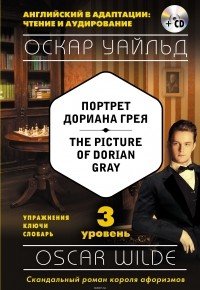 This story begins when not very famous artist Basil draw a picture of young and very handsome man Dorian Grey. Artist said to his friend Lord Henry that he took very much himself in that picture. Lord Henry was very excited by Dorian’s handsomeness, and he decided to teach young man how he should live and what he can use his youth. At the first they meeting, when Basil was painting picture from sitting Grey, Henry was telling to Dorian that the youth and beauty is the most important things in the world, but they will be disappeared with years. So when Basil has finished the picture and Dorian has seen his beautiful portrait, he was excited by himself beauty and was frightened because he will lost it in future…
 Manager is a profession that appeared not so long ago. But it developed in every sector of business, service and production very fast. Nowadays it’s almost impossible to imagine any successful business without thoughtful management. The more different organizations developed, the less understanding among different departments in every area was left. And then managers came to help. They give different tasks, control their fulfillment in the different departments and take the main part in the organization development in general too. In this book you will read four stories about successful managers. They didn’t only make amazing careers but also made their companies world leaders.
 Вы зашли на сайт преподавателя английского дистанционно. Меня зовут Александр. Я даю индивидуальные разговорные уроки


 Стоимость занятия с репетитором по английскому языку вообще, и в Москве в частности, рассчитывается от стоимости академического часа, равному 45 минутам, и зависит от нескольких, не связанных между собой, факторов. Реальный разбос стоимости 1 академического часа в Москве составляет от 300 рублей у начинающего репетитора-студента, обычно студентки, и до 6000 рублей у репетитора-носителя языка, работающего на элитную категорию учащихся.