Домой Блог Страница 30

Dogon Star Connection

Located in Mali West Africa, the Dogon have a rich culture dating back to around 3200 BC and are believed to have descended from ancient Egyptians. Deeply rooted traditions of the Dogon people speak of the Nommos who visited from a companion star to Sirius. The Nommos are known as amphibious beings that have also appeared in numerous related myths found in the Babylonian, Accadian and Sumerian cultures.

Sirius’ companion star has a 50 year elliptical orbit and is not visible to the naked eye. Modern astronomers did not know the companion star existed until the Dogon myth was discovered. They tell us how the Nommos shared the knowledge of Sirius with them and left behind several artifacts. One artifact depicting the Sirius constallation carbon dates to 400 years ago, a little over 230 years before astronomers suspected the existence of the companion star.

Every 60 years the Dogon celebrate the cycle of Sirius A and B which rises further questions considering Sirius B’s 50 year cycle. The Dogon legend also mentions a 3rd star in the system, which would be called Sirius C, if found by modern telescopes. Nommos are believed to inhabit a planet orbiting Sirius C though mainstream science does not consider the Sirius constellation to be a prime candidate for life. Research in 1995 concluded that based on observations of motions in the Sirius system, a red dwarf star about 1/20th the mass of Sirius B exists.

Sumerian Anunnaki – reveals alien past

Ancient Sumerian texts define the Anunnaki as “those who from heaven to Earth came” described as those who descended from the heavens, and in certain context, the fallen angels. By comparative religions, its believed the book of Genesis (600BC) was extracted from the Sumerian Epic of Creation (~6000-8500BC). Records are filled with great details of Anunnaki having depictions as the watchers, also evident in further Biblical texts by Daniel and Jubilees.

According to the accounts, the Anunnaki were the Gods & Goddesses who met occasionally to indirectly determine the fate of mankind, if by no fault of their own. Abraham’s father Terah was believed to have served the fallen angels, or the sons of the gods/goddesses, found in Psalms in reference to the Nephilim. Sharing part of the Babylonian creation myth as the children of Anu and Ki, the Anunnaki are also associated with the stories of Planet X, or the 12th planet, and its return to Earth over a long elliptical orbit, written about by Zecharia Sitchin.

Piri Reis Map Mystery

The Piri Reis map remains one of the strangest ancient discoveries of modern times.

  • Its age has been confirmed

  • The map shows antarctica at a time it had not been discovered


Many ancient artifacts were found during the topkat palace, Turkey, reorganization among them was the Piri Reis. The map drew immediate attention as it was one of the earliest maps of America, and the only 16th century map that shows South America in its proper longitudinal position in relation to Africa. The map is drawn on gazelle skin and was compiled in 1513 by Ottoman-Turkish military admiral and cartographer Piri Reis. The half of the map which survives shows the western coasts of Europe, North Africa, and the coast of Brazil. Various Atlantic islands, including the Azores and Canary Islands are shown, as is the mythical island of Antillia and possibly Japan.

The most puzzling aspect of the map is its depiction of Antarctica. According to the history books, the first confirmed sighting of Antarctica occurred in 1820 by the Russian expedition of Mikhail Lazarev and Fabian Gottlieb von Bellingshausen. The Piri Reis map not only shows a land mass near present day Antarctica, but it depicts Antarctica’s topography as not being masked by ice and in great detail. It has been estimated that Antarctica has been covered with ice for around 6000 years.

Many people have raised the question, how could a Turksih admiral from half a millennium ago map a continent’s topography that has been covered with ice for thousands of years? Reports have been published claiming that the Ottoman Empire had knowledge of some form of ancient Ice Age civilization. However, these claims are generally considered to be pseudo-scholarship, and the scholarly opinion is that the region sometimes thought of as Antarctica is more likely Patagonia or the Terra Australis Incognita (Unknown Southern Land) widely believed to exist before the Southern Hemisphere was fully explored.

On the map, Piri Reis gives resource credit to a map drawn by Christopher Columbus, which has never been discovered. Geographers have spent several centuries unsuccessfully searching for a “lost map of Columbus” that was supposedly drawn while he was in the West Indies. After the discovery of the Piri Reis map, an unsuccessful investigation was launched to find the lost Columbus source map. The historical importance of the Piri Reis map lies in its demonstration of the extent of Portuguese knowledge of the New World in 1510. The Piri Reis map is currently located in the Library of the Topkap Palace in Istanbul, Turkey, but is not currently on display to the public.

Strange ancient mystery – The Ubaid Lizard Men

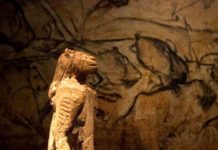
Al Ubaid archeological site in Iraq is a gold mine for archeologists and historians. It has yielded numerous objects from a pre-Sumerian time called the Ubaid period (5900–4000 B.C.). However, some of these objects are quite disturbing. A number of Ubaid statues depict strange, lizard-like humanoid figures in unique, unceremonious poses that seem to indicate they were not gods (such as the animal-headed deities of Egypt), but rather a race of lizard people. Of course, the statues have been drawn into stories and theories of reptilian aliens that used to roam the earth (and perhaps still do, according to conspiracy theorists). Although this seems unlikely, their true nature remains a mystery.

The figurines are presented with long heads, almond shaped eyes, long tapered faces and a lizard-type nose. What exactly they represent is completely unknown. According to archaeologists, their postures, such as a female figure breast-feeding, does not suggest that they were ritualistic objects. So what did these lizard figures represent? Whatever they were, they appear to have been important to the ancient Ubaidian people.

We know that the Serpent was a major symbol used in many societies to represent a number of gods, for example, the Sumerian god Enki, and the snake was used later on as the symbol for the brotherhood of the Snake.

Ancient mystery of the Yonaguni Monument

The Yonaguni Monument Remains one of the worlds biggest unexplained mysteries.

Yonaguni Island Submarine Topography is a massive underwater rock formation off the coast of Yonaguni, the southernmost of the Ryukyu Islands, in Japan. There is a debate about whether the site is completely natural, is a natural site that has been modified, or is a man-made artifact.

Many claim it may have been made by ancient aliens, thousands of years ago.

The underwater monument at is one of the clearest pieces of evidence of an advanced civilization at a time when mainstream archaeology says there was no advanced societies on Earth. The only other explanation can be aliens built it!

Of all the famous monuments in Japan, perhaps none is more perplexing than Yonaguni, an underwater rock formation that lies off the coast of the Ryuku Islands. It was discovered in 1987 by a group of divers who were there to observe Hammerhead sharks, and it immediately sparked a huge amount of debate in the scientific community: is the monument a natural formation, or is it man-made?

Alien evidence

Scientists have long argued that millennia of strong currents and erosion have carved the formations out of the ocean floor, and they point to the fact that the monument is all one piece of solid rock as proof that it was not assembled by a builder. Others, though, point to the many straight edges, square corners and 90-degree angles of the formation as proof that it’s artificial.

They often cite one formation in particular, a section of rock that resembles a crude carving of a human face, as evidence. If they are right, then an even more interesting mystery presents itself: the monument had to have been built when it was last above sea-level… over 10,000 years ago!

The mystery of The Taulas Of Menorca

The taulas are ancient megaliths that stand on the Spanish island of Menorca, quite similar in appearance to the more famous Stonehenge. While it is thought that the taulas were erected by the ancient inhabitants of the island at some point after 2000 B.C., there is no concrete evidence as to why the structures were built or why they are found only on Menorca and not on neighboring islands.

Naturally, theories abound. Some believe that the stones symbolized a temple of some sort. Waldemar Fenn, a German archaeologist, has pointed out that the taulas all faced south, leading him to speculate that they were erected as a religious monument to measure the movement of the moon. His theory became known as the Taula Moon Theory.

Unfortunately, Fenn’s theory could only be applied to 12 of the 13 intact taulas. It did not match the megalith found on the northern side of the island. The real reason for the taulas’ construction remains unknown.

Strange Ancient Treasure Discovered in Transylvania

Two large stashes of bronze weapons and jewelry, from the eighth century B.C., have been discovered in southern Transylvania, in Romania.

The hoards date back to a time before minted currency had been invented or writing had spread to this part of Europe.

Within the collections, which held 300 and 50 objects, respectively, the researchers discovered double axes, short swords and spears. They also found brooches, foot and arm bracelets, pendants, torques (a kind of neck ring), beads, and hairpins. (All the jewelry was made of bronze.) The researchers found parts of horse harnesses, as well. [See Photos of the Bronze Hoards from Transylvania]

Accidental Archaeological Discoveries

“The majority of the objects are made of bronze, yet there are also weapons and tools made of iron,” wrote Corina Bors, a senior archaeologist with the National History Museum of Romania, in the summary of a presentation she gave recently at the European Association of Archaeologists annual meeting in Glasgow, Scotland.

The hoards were discovered in a small ravine, dotted with springs, on the southern edge of a prehistoric site now called Tartaria–Podu Tartariei vest, which spreads over an area of 25 acres (10 hectares). This site was first discovered in the spring of 2012 during archaeological investigations carried out before the construction of a motorway in the area.

Many other finds were made at the site, including offering pits containing broken pottery and a burial site containing several bodies.

Gift for the gods?

The archaeologists said they aren’t sure who deposited the hoards or for what purpose. In different parts of Europe, bronze hoards have been found in caves, springs, marshes and rivers, Bors said. “Such bronze hoards might be seen as votive depositions, or, in other words, gifts to the deities of that time,” Bors told Live Science.

Ancient Mystery of Puma Punku Stones in Tiahuanaco

Something strange and unexplainable happened at Puma Punku

They are arguably the oldest, and most baffling ruins on the face of the Earth. It is hard to imagine how they did not come to be known as one of the wonders of the world like the Great Pyramid. Spectacular in its own right, the Great Pyramid is, yet it pales in comparison to the ruins of Puma Punku in Tiahuanaco, in South America.
The ruins of Puma Punku are one of four structures in the ancient city of Tiahuanaco. The others three structures are; The Akapana Pyramid, the Kalasasaya Platform, and the Subterranean Temple.

Advanced Technology

Even with modern day technology and information, these structures defy logic, and confound those who seek to solve the mysteries that lie within them. The ruins of Puma Punku are said to be the most fascinating, and most confusing of all.

Puma Punku is believed to have once contained a great wharf, and a massive four part structure. Yet all that remains today are megalithic ruins from some cataclysmic event in history. A great earthquake? A comet that came too close to the Earth? A worldwide flood? These are all possible causes to the destruction of the once great structure that is now the ruins of Puma Punku.

Not only is there evidence to support the claim of a cataclysmic flood, but there is even evidence to support the theory that people once lived there before such a flood even occurred. The suspected flood could have happened somewhere around 12,000 years ago, and there is scientific evidence of tools, bones, and other material within flood alluvia, which suggests that a civilized people were there prior to any flood. Other evidence, that being carvings of bearded people that are not Andean, have been recorded throughout the area.

How is it that these ancient people were able to cut stones like this?

It is as if only master builders were allowed to come in and construct Puma Punku. All of the blocks are cut so that they interlock, and fit together like a puzzle. There is no mortar. There are only great stones that once fit together creating a structure some four levels high.

If these people could have moved these large stones to this precise location, then obviously they also had a way to place them one on top of another, but how in the world was this accomplished?

There are no trees in the area, the nearest quarry is at least 10 miles away, and we have no records as to how any of this could have been done. As far as most are concerned, there is no way that the Andean people could have done this 2500 years ago. If they couldn’t have done it, how is it possible that an even older group of people accomplished it?

Interlocking Stones

There is one more significant thing to mention regarding the ruins of Puma Punku. Not only were these stones cut somehow, but they were finely cut. The cuts on these stones are perfectly straight. The holes cored into these stones are perfect, and all of equal depth.


 

The strange Glozel Tablets

In 1924, a farmer named Emile Fradin found an underground chamber full of objects in one of his fields. There were strangely marked human bones, hermaphrodite idols, masks, and several tablets engraved with an unusual language. Fradin put out an open invitation for people to come and dig. They did so for years, and thousands of artifacts were uncovered.

Debate over the discoveries was so dramatic that the New York Times called it the “Glozellian war,” saying in 1927 that the whole of France was “divided into two violently opposed opinions” over whether the artifacts were genuine. Some archaeologists claimed that the items were from the Neolithic period and predated the Phoenician alphabet, from which the Greek, Hebrew, Latin, Arabic, and Cyrillic alphabets evolved. If that was true, the finds would mean the cradle of Western civilization was in France and not the Middle East.

The battle went to the courts. Fradin sued the head of the Louvre for defamation. Police raided the farmhouse and arrested the farmer for fraud after discovering freshly carved tablets—but believers claimed the fake tablets were plants. A report by international experts called them all fakes, but it just made everyone dig their heels in further. Fradin was never convicted of anything.

Modern tests say the bones range from as far back as 300 B.C. to as recently as the 1600s. Glass at the site is from Medieval France. The tablets themselves seem to match the earliest dates of the bones, making them over 2,000 years old. Their clay is chemically identical to the local clay, suggesting they originated there. Most now agree the text appears to be a form of old Celtic.

Yet there’s still a mystery as to why so many unusual and varied items ended up in a featureless field. No other site like it has been found anywhere in Europe. Fradin himself stuck to his story for 80 years, taking any secrets to his grave when he died in 2010.

Quimbaya Gold Artifacts

According to mainstream archeology, the pre-columbian Quimbaya culture were believed to have lived in South America from 300 to 1550 CE and are best known for their precise gold and metalwork. The majority of gold pieces discovered are made with a tumbaga alloy with 30% copper, very similar to those accounts mentioned by Plato in his dialogues about the lost city of Atlantis. Among the intricate gold works are several types of insects and two devices that stand out to be aerodynamic in nature and of no other insect known to exist.

The pieces look very much like the designs of modern airplanes and incorporate a number of features essentially proving the Quimbaya knew and understood the principals of flight. Scale replicas of the golden flyer were built 5 times larger and tested precisely. Results from the tests showed proved these airplane shaped devices were capable of flight and actually flew without any modifications using modern techniques.

Many of these types of gold reliefs have been discovered. It is easy to notice that they look very much like Jet airplanes. There are many variations to this theme. Some archeologists argue that they are simply birds and the Quimbaya took some artistic liberties. However, others argue that there are too many coincidences that bother them. The fact that the wings are on the underside of the fuselage unlike an organic animal and much more like a modern jet. Also the orientation of the stabilizer tail. It is vertical like a plane, not horizontal like an organic life form. Also, does that one spot near the front look like a cockpit for a pilot?

Audio books

Чтение

The Ace of Pentacles

♦️Карты Таро. Туз Пентаклей. The pre-intermediate level. The Ace of Pentacles is a significant...

Случайный выбор

Ли Цин Чжао — великая китайская поэтесса.

13 марта 1084 году в Китае родилась девочка, которой было суждено стать одной из самых прославленных поэтесс мира. Иногда ее даже называют...